
Key Takeaways:
- Great explainer videos succeed by turning complex products or services into simple, problem-focused stories that help audiences quickly understand, remember, and act on a message.
- Video is a highly effective communication tool because people absorb information more easily through combined visuals and audio, making explainer videos influential in both learning and purchasing decisions.
- For global businesses, localization is just as important as production quality, since adapting language, visuals, and cultural references helps build trust and engagement across different markets.
In today’s business world, the problem isn’t a lack of information. It’s having too much of it. Organizations must communicate clearly in a crowded digital space where people have limited time and attention. As companies grow across different markets, their products and services often become more complex. Explainer videos help solve this problem by turning complicated ideas into simple, engaging stories. What was once a useful marketing tool has become an important part of modern communication.
A great explainer video does more than describe features. It helps people understand how a product or service solves a real problem. When done well, it can introduce your company to customers around the world, educate potential buyers, and build trust at any time of day. The best explainer videos don’t just explain. They help audiences understand and remember your message.
Why Explainer Videos Matter in Modern Business Communication
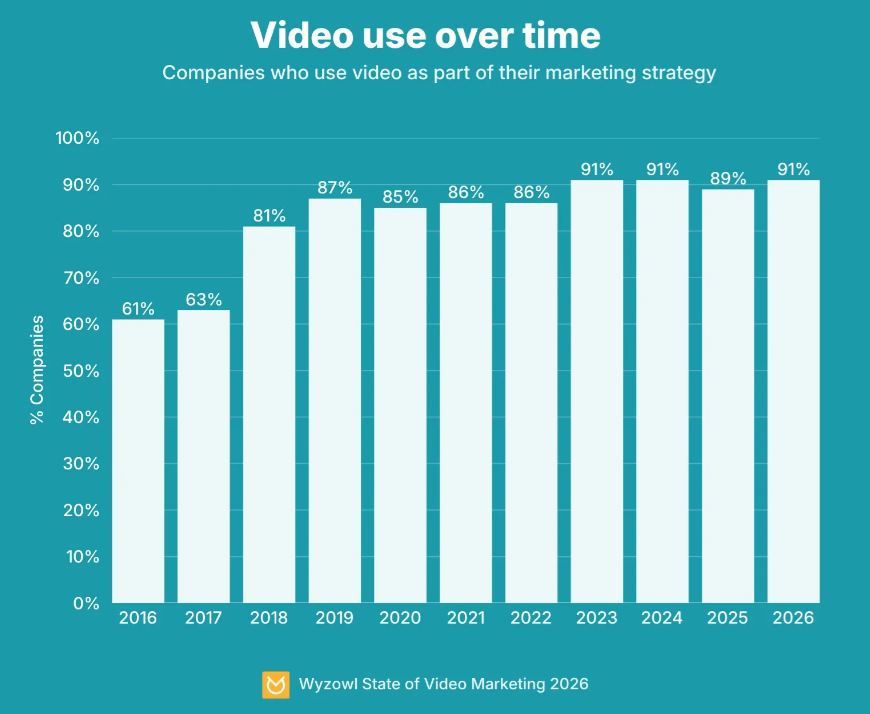
The rise of video is not just a marketing trend. It reflects how people prefer to receive information. Research shows that 91% of businesses now use video as part of their marketing strategy. As digital communication continues to grow, video has become one of the fastest and most effective ways to reach audiences.
For many companies, clear communication is more important than ever. People are often short on time and want clear information before making a decision. Whether they are choosing a business service or a consumer product, they need to understand the value of what is being offered.
The Psychological Advantage of Video
Explainer videos work because they combine visuals and spoken information. People often understand and remember information better when they see and hear it at the same time. This makes video an effective tool for explaining products, services, and complex ideas.
Research shows that 96% of people have watched an explainer video to learn about a product, and nearly 89% say a video has influenced their decision to buy.
Today, many customers research products and services on their own before contacting a company. An explainer video can answer questions early, build confidence, and help people understand why a solution matters. For organizations operating globally, these videos are valuable communication tools that work across time zones and languages.
| Metric | Impact of Explainer Videos |
| Usage | 91% of businesses use video as a marketing tool. |
| Learning | 96% of people watch explainer videos to understand products. |
| Conversion | 89% of viewers say a video influenced a buying decision. |
| Preference | 73% of marketers find videos under 2 minutes most effective. |
The Building Blocks of an Effective Explainer Video
A successful explainer video may look simple, but it follows a clear structure designed to guide viewers from a problem to a solution. Every part of the video should help move the audience toward understanding and action.
The Script: The Foundation of the Story
The script is the most important part of the video. One of the biggest mistakes companies make is trying to include too much information. In a typical 60-to-90-second video—the sweet spot for engagement—there is only enough room for about 150 to 240 words. Every word must earn its place.
For example, imagine a logistics company that has developed an AI-powered route planning tool.
Instead of saying:
“Our software uses advanced AI to optimize logistics routes,”
A stronger approach would be:
“Shipping delays cost businesses millions every year. What if you could spot problems before they happen?”
This focuses on the audience’s problem first and then introduces the solution.
A strong explainer video usually follows four key steps:
- The Hook (0–5 seconds): Grab attention with a question, challenge, or common problem.
- The Problem (5–20 seconds): Show the issue the audience is facing.
- The Solution (20–50 seconds): Explain how your product or service helps solve that issue.
- The Call to Action (50–90 seconds): Tell viewers what to do next, such as learning more, requesting information, contacting your team, or making a purchase.
Visual Storytelling and Alignment
The visuals should support the message, not simply repeat it. If the narrator talks about reducing complexity, the visuals could show a confusing system becoming clear and organized. Good visuals help viewers understand ideas faster and make the message more memorable.
Design Choices That Drive Engagement
For global companies, design is about more than appearance. It influences how people view your brand and understand your message. Different animation styles can create very different impressions.
Animation Styles and Their Strategic Use
- 2D Animation: Clean, professional, and flexible. It is a popular choice because it can explain complex concepts clearly.
- Motion Graphics: Uses text, icons, and graphic elements to present information. It works well for data and statistics.
- 3D Animation: Creates a premium and modern look. It is especially useful for demonstrating physical products.
- Whiteboard Animation: Uses a hand-drawn style that makes educational content easy to follow and understand.
The Critical Role of Localization
Companies that operate globally need to think beyond a single language or market. If a video is only available in English, many potential customers (up to 76% of the global market) may not connect with the message as effectively.
Localization is more than translation. It means adapting content for local audiences while keeping the original message and intent. This includes language, cultural references, visuals, and tone.
For example, a hand gesture that signifies “OK” in the United States can be deeply offensive in other cultures. A color like red might signify danger in one region but prosperity in another. Effective localization helps a brand feel familiar and trustworthy, no matter where the audience is located.
| Element | Localization Strategy | Business Benefit |
| Language | Native-speaker voiceovers and scripts. | Builds immediate trust and rapport. |
| Visuals | Adapting icons, clothing, and settings. | Avoids cultural friction or confusion. |
| Formats | Adjusting metrics, dates, and currency. | Increases the perceived local presence. |
| UI/UX | Translating on-screen text and interfaces. | Enhances clarity for software demos. |
Learning from Success and Avoiding Common Mistakes
Many successful explainer videos focus on everyday situations instead of technical details. Google Drive, for example, showed people sharing family photos and travel plans. This made the idea of cloud storage easier to understand and more relevant to viewers.
(378) Go Google: Google Drive – YouTube
Tatari uses animation to explain how TV advertising performance can be measured. Instead of relying on technical language, it presents the concept through a clear story and visual examples. This helps viewers understand complex ideas more easily.
(378) Tatari – Incremental Measurement Explainer Video – YouTube
Common Pitfalls to Avoid
- Lack of Focus: A video aimed at everyone usually fails to connect strongly with anyone. Define your audience clearly before creating content.
- The Feature Dump: Listing every feature instead of focusing on the most important customer problem.
- Poor Audio Quality: Viewers may tolerate average visuals, but they will turn off a video with poor audio.
Conclusion: Turning Complex Messages into Clear Value
Clear communication creates a competitive advantage. A great explainer video takes a complex idea and turns it into a simple story that people can understand quickly. It helps audiences understand a problem, see a solution, and decide what action to take next.
For global companies, investing in a professionally produced and localized explainer video can strengthen brand trust and improve engagement. It helps ensure that your message is understood wherever your audience is located. In a world full of distractions and information overload, the ability to explain your value clearly may be one of the most important strengths a business can have.
Ready to create explainer videos for global audiences? Explore Clearly Local’s video creation services to create engaging, localized content that helps customers clearly understand your message and take action.
FAQs
1. What is the ideal length for an explainer video?
The most effective explainer videos are typically 60 to 90 seconds long, which allows enough time to present a problem, explain a solution, and include a call to action while maintaining viewer engagement and avoiding information overload.
2. What makes an explainer video effective?
An effective explainer video focuses on the audience’s problem rather than simply listing product features, using a clear structure that includes a hook, the problem, the solution, and a call to action to guide viewers toward understanding and action.
3. Why are explainer videos valuable for businesses?
Explainer videos help businesses communicate complex information quickly and clearly, educate potential customers, build trust, and influence purchasing decisions by combining visual and audio elements that improve understanding and retention.
4. Why is localization important for explainer videos?
Localization ensures that an explainer video resonates with audiences in different regions by adapting language, visuals, cultural references, and tone, helping brands avoid misunderstandings and build stronger connections with global customers.
5. What are the most common mistakes to avoid when creating an explainer video?
Common mistakes include trying to appeal to everyone instead of a specific audience, overwhelming viewers with too many product features, and using poor-quality audio, all of which can reduce engagement and weaken the video’s overall impact.